


DOT Medical Examination for Drivers: Understanding the Requirements
A DOT medical examination helps determine whether commercial drivers meet the physical health standards required for safe driving. Our professional team provides DOT physical examinations to assess drivers’ medical history, vision, hearing, blood pressure, and overall health. Understanding certification requirements, examination frequency, and possible medical exemptions can help drivers prepare for their evaluations and maintain compliance with applicable federal regulations. For more information, contact us or book an appointment online. We are located at 4100 NW 9th St, Suite #100, Miami, FL 33126.
Check Our Offers
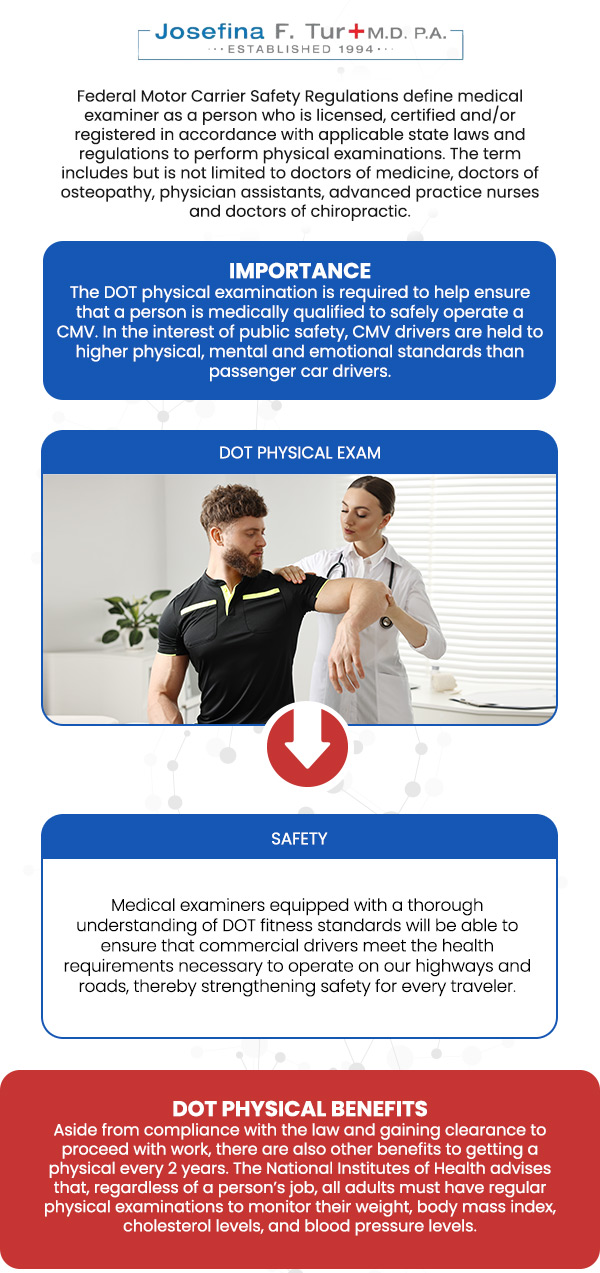
Table of Contents:
What is a DOT medical examiner, and what do they do?
How often do I need to see a DOT medical examiner?
Are there any exemptions from the DOT medical exam?
How do I find a certified DOT medical examiner?
What should I bring to my DOT physical?
What happens if I fail my DOT physical?
How long does a DOT medical examination take?
Can I pass a DOT physical if I have high blood pressure?
Can I renew my DOT medical card before it expires?
Get Clarity on the DOT Exam with Josefina F. Tur, M.D.
Medical References
A DOT medical examiner is a healthcare professional who is certified by the Federal Motor Carrier Safety Administration (FMCSA) and listed on its National Registry of Certified Medical Examiners. These professionals evaluate commercial drivers to determine whether they meet federal physical qualification standards.
During a DOT medical examination, the examiner reviews your medical history and assesses different aspects of your health, which may include:
• Blood pressure and cardiovascular health: Evaluating blood pressure and relevant medical history.
• Vision and hearing: Checking whether you meet the required vision and hearing standards.
• Neurological health: Reviewing conditions that could affect alertness, coordination, or physical control.
• Musculoskeletal function: Assessing mobility and physical conditions that could interfere with safe vehicle operation.
• General health: Reviewing medications, previous surgeries, chronic conditions, and other relevant medical concerns.
The examiner may also request additional medical records or information from your treating healthcare professional before making a decision.
After the examination, the examiner determines whether you meet the applicable medical standards. Depending on the findings, you may receive a medical examiner’s certificate, be asked to provide additional information, or be found temporarily or permanently not qualified.
Most commercial drivers subject to federal DOT medical certification requirements must complete a medical examination at least once every 24 months. If the examiner determines that a health condition needs closer monitoring, the medical certificate may be issued for a shorter period.
For example, drivers with certain cardiovascular conditions, high blood pressure, or other medical concerns may need more frequent evaluations. Drivers with insulin-treated diabetes or certain vision conditions also have specific certification requirements that may involve annual examinations.
You should schedule another examination before your current medical certificate expires. You may also need an additional evaluation after an illness, injury, or change in health that could affect your ability to operate a commercial vehicle safely.
Some drivers may qualify for limited exemptions or alternative qualification programs under FMCSA regulations. However, exemptions are not automatic, and having a medical condition does not necessarily mean you are disqualified from commercial driving.
Depending on the circumstances, available provisions may include:
• Vision-related exemptions: Certain drivers who do not meet standard vision requirements may qualify under applicable alternative standards or exemption provisions.
• Hearing exemptions: Drivers who do not meet the standard hearing requirements may be eligible to apply for an FMCSA exemption.
• Seizure exemptions: Certain drivers with a seizure history may qualify after meeting specific medical and safety requirements.
• Skill Performance Evaluation (SPE): Drivers with certain limb impairments may qualify through an alternative evaluation process.
The appropriate requirements depend on whether you drive in interstate or intrastate commerce and the specific medical standard involved. An exemption or waiver does not automatically provide medical certification. Drivers must still meet the applicable requirements and obtain the necessary approval.
Finding a properly qualified medical examiner is an important step before scheduling your DOT physical. Federal regulations require most interstate commercial drivers to be examined by a healthcare professional listed on the FMCSA National Registry of Certified Medical Examiners.
Here are some steps to follow:
• Visit the FMCSA National Registry: Use the official National Registry search tool to find certified examiners.
• Search by location: Enter your city, state, or ZIP code to find nearby medical examiners.
• Verify the examiner’s listing: Confirm that the healthcare professional has an active National Registry listing.
• Ask about appointment requirements: Contact the medical office to confirm availability, documentation, and any preparation instructions.
• Bring your medical information: Have your medication list, relevant medical records, and any required specialist reports ready.
Choosing a listed medical examiner helps ensure that your examination follows the applicable federal requirements.
Frequently Asked Questions About DOT Medical Examinations
Bring a valid photo ID, a list of your current medications, and relevant medical records. If you have a chronic medical condition, bring recent test results or reports from your treating healthcare professional when applicable. Drivers who use glasses, hearing aids, or other medical devices should bring them to the examination.
If you do not meet the required medical standards, the examiner may determine that you are temporarily or permanently not qualified. If additional medical information is needed, the determination may be delayed while you provide the requested documentation. You should discuss the findings and possible next steps with the examiner.
The examination time can vary depending on your medical history, health conditions, and whether additional information is needed. A straightforward examination may take less time than one requiring medical records, further testing, or additional evaluation.
Yes, having high blood pressure does not automatically disqualify you from commercial driving. The examiner evaluates your blood pressure readings, medical history, and overall health. Depending on the findings, you may qualify for a shorter certification period and additional monitoring.
Yes. Scheduling your next examination before your current certificate expires can help you avoid a gap in medical certification. Your next certificate will depend on the examiner’s findings and the applicable medical requirements.
Josefina F. Tur, M.D., provides DOT medical examinations, helping commercial drivers understand the medical requirements for safe driving and DOT certification. The examination includes a review of medical history and an assessment of physical health, vision, hearing, and other factors that may affect the ability to operate a commercial vehicle safely.
Drivers can receive information about the DOT examination process, required documentation, and medical certification requirements. Dr. Tur emphasizes the importance of understanding individual health needs and meeting applicable medical standards.
For more information, contact us or book an appointment online. We are located at 4100 NW 9th St, Suite #100, Miami, FL 33126. We serve clients from West Miami, Coral Gables, Miami Springs, Virginia Gardens, Doral, Hialeah, South Miami, Sweetwater, Miami Shores, El Portal, and surrounding areas.
FMCSA – DOT Medical Exam and Commercial Motor Vehicle Certification
FMCSA – Medical Regulations and Guidance
FMCSA – Driver Exemption Programs
49 CFR § 391.43 – Medical Examination Requirements
49 CFR § 391.45 – Medical Examination and Certification Frequency
FMCSA – National Registry of Certified Medical Examiners
Check Out Our 5 Star Reviews








 Send Text
 How May I Help You?
